


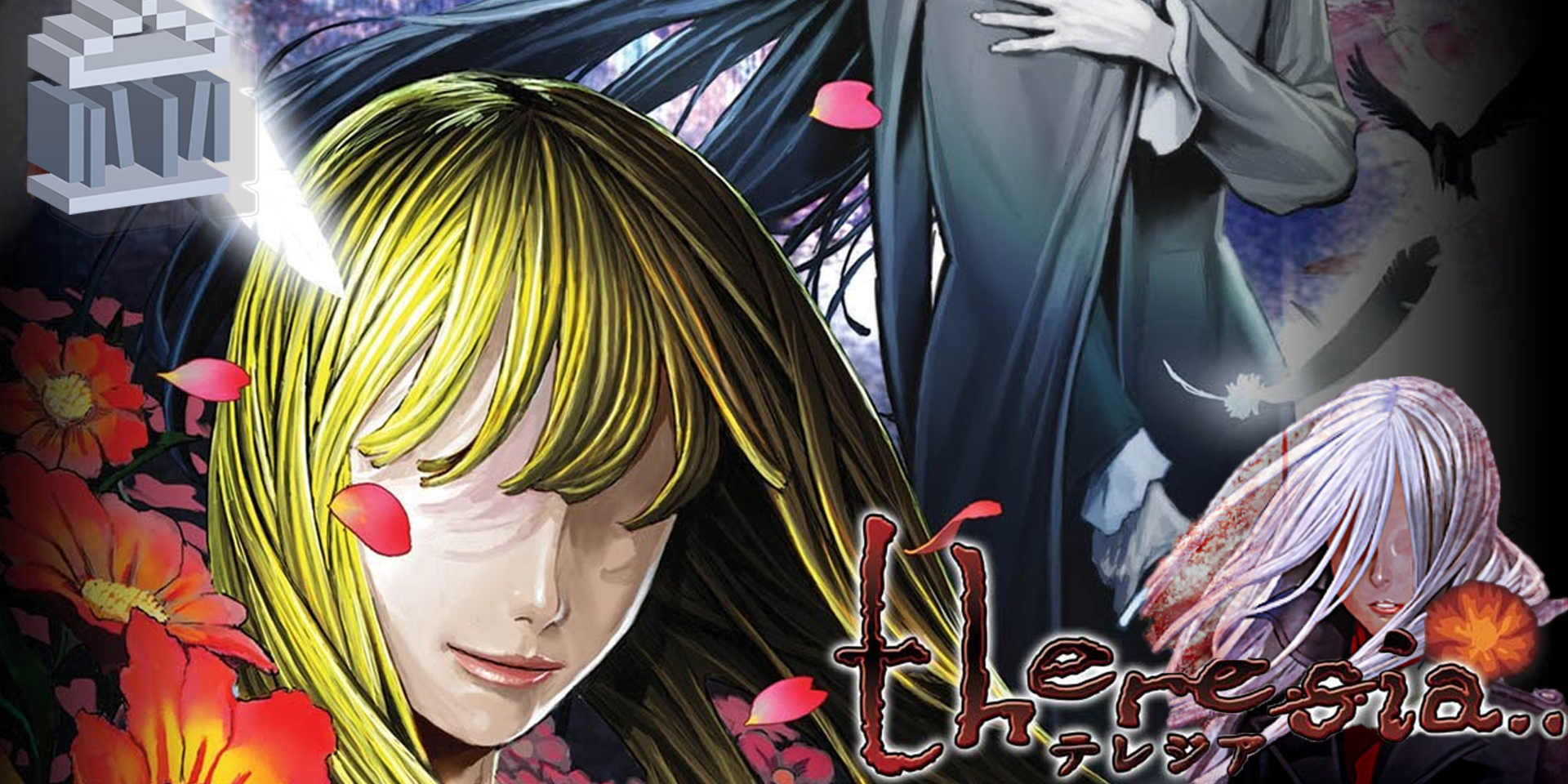
Imagine waking up from a long slumber, one that was haunted by nightmares of a distant past that you didn’t seem able to escape. Your eyes adjust to the dim light of your surroundings and you find yourself alone in a deserted factory with barely enough air to breathe. The only clue to the meaning of your existence in this world is one single word hastily scribbled on a piece of paper: Theresia. Surviving and finding out the truth means exploring this haunted place, filled with rotting corpses and deadly traps. What is ultimately your identity and who is planning to destroy you?
[ps. article is spoiler-free, I only talk about things that happen in the first few minutes so read on without worry]
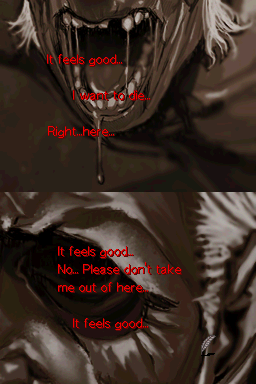
Released in Japan on September 11 2008 on the Nintendo DS, and developed by Japanese studio WorkJam, Theresia was a very unique specimen, a game that was all about pain and suffering. Imagine biting into a soft lil cake slice spiced with pieces of glass and nails. Even on the DS, where several left-hand and strange games found a comfy little home, such as The World Ends With You and Rhythm Heaven, Theresia stood pretty much alone. A mixture of point and click adventure, visual novel and dungeon crawler, caked with a morbid and suffocating horror atmosphere. A horror that was uniquely human.
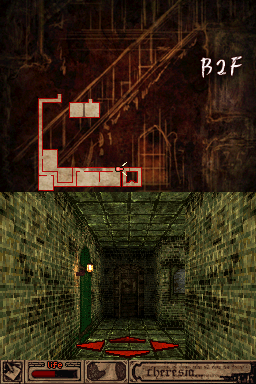
As with other DS games before, such as Ace Attorney, this wasn’t Theresia’s first rodeo, as it first stained Japanese mobile phones with blood in 2006. The Nintendo DS version did something new, though, republishing the first episode, Dear Martel, combined with a new one, Dear Emile. But Emile was the third episode in the series, the second one, Dear Liszt, was skipped over. The console version was enhanced by making the exploration full 3D, with a rough first person look which definitely brings to mind nightmares of From Software’s early games (King’s Field anyone?) or a less interactive Dementium: The Ward. While each story is meant to be played separately, there are overall connections, while the gameplay stays pretty much the same.
Only released in the United States and Japan, Theresia was one of the few DS games to receive a Mature rating. In this case, it seems to have been pretty well deserved, even for a platform where the once family-friendly Nintendo seemed to have no qualms in greenlighting horror games such as the above mentioned Dementium and the utterly mediocre Touch the Dead. Still, I would dare say Theresia is more disturbing than many other titles in its genre, even beyond the DS, touching on topics of violence and psychological torture. Making the protagonist a feeble girl wandering around on her own in an unknown place, might not be a new idea, but as opposed to games such as Silent Hill 3 and Parasite Eve, Leanne is utterly defenseless.
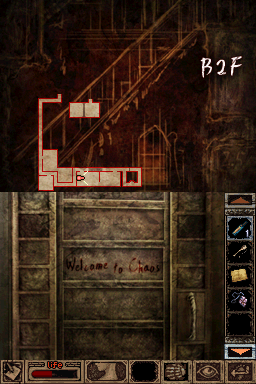
As the game progresses, she keeps being hurt with arrows, tortured with nails, cut by knives, impaled by spikes, and choked with poisonous gas. It is not possible to avoid most of these traps either, you are going to suffer through them. This is made worse because the game doesn’t render this in classic gaming fashion, with your HP going down or with a goofy little scream. No, the player feels every cut on her skin, with perfect sound design and the screen sullied with blood. It is that weird feeling of getting startled by a sudden jolt of electricity going through our main protagonist but also feeling sorry for her. Leanne shares every little bit of pain with the player. Were these horrific devices concocted to keep someone from getting out? Or, perhaps, they are there to prevent someone from getting in?
You will soon uncover the truth, since the person who set up all these traps is indeed someone very close to Leanne. This is a person whose love is apparently expressed only through torture and pain. This overall theme of love through cuts and bruises also connects to the relationship between Leanne and her mother. The idealized image of motherhood being one of protection and love, ends up distorted like a funhouse mirror. Theresia clearly speaks of toxic relationships, where punishment only leaves you crawling back for more. These deep traumas are hard to heal and these scars will remain forever, especially in children. The plot also deals with, in usual Japanese horror fashion, a mysterious sickness, mutilation, experiments and, of course, the military wanting to keep things secret. But I won’t spoil anything more.
The original genre of Theresia would be the so called “trap escape adventure”, which I would be hard pressed to define it as well-known outside of Japan. Still, with its abundance of mutilated corpses, rotting flesh and a macabre and suffocating atmosphere, plus punishing gameplay which always keeps the player on their toes, I find a much better modern term to define Theresia: a Soulslike. This really feels like an experience made to let the player suffer together with the protagonist of the game. But even beyond a Soulslike, one feels that Leanne cannot withstand all this punishment and wishes to keep her safe from harm. But this is not that kind of game; pain and torture are necessary if you want her to get out of this horrifying place alive.
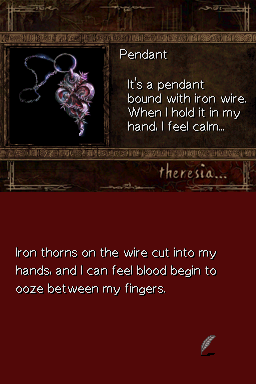
Everything in the game is centered around pain, like the hint system. Leanne has a heart pendant with barbed wire around it, to feel calm she will squeeze it in her hand and blood will drip out. While it would be an interesting idea to have this hurt her, it doesn’t so no punishment comes from getting hints. By playing through the story of Dear Emile, we will discover the real truth about the behaviour of one disturbed parent and also about Leanne’s family. Dear Martel expands even more on this horrific story, working – as it was originally released as the first episode – as a sort of prequel, even though in the DS version you are basically forced to play it after the “main” event. It almost feels like they threw it in as a bonus, as Dear Emile would have probably stood on its own anyway, perhaps just being a little short, clocking in at around 3-4 hours.
While “dungeon crawler” is a classic term that might be used, there is no combat in the game and, consequently, there are no enemies. Instead, you progress through Theresia by finding items, opening doors and solving puzzles, along with trying to survive the devious and horrible traps. The map system, which is indeed laid out in dungeon crawler fashion, is especially important, as finding your way through corridors and rooms would be difficult otherwise. Ironically, Leanne can only survive by heeding the advice and notes left by her torturer. But there is little to no respite in the abandoned factory where Leanne is trapped, alongside us.
Ironically, while everyone expects sequels to never be as good as the original, the first episode is less interesting than its (third) sequel, with more instant death traps and a less suffocating atmosphere. While it is nice to have a sort of prequel to the story, it is a shorter and less engrossing experience. Almost feels like a thing for completionists. Still, we can consider ourselves lucky that WorkJam developed this Nintendo DS remake of the original mobile phone game. Otherwise, it is highly probable that all the episodes would have become lost media as with many other Japanese mobile games of the time.
While the story of the game itself is quite tragic, what happened after the release of Theresia on DS is no joke either. With the game remaining quite obscure and selling poorly, at least outside of Japan, the developers went bankrupt in 2011. They did release a final DS game, also released in the US, Jake Hunter: Detective Story. I have played it, I don’t remember much about it so I don’t think it was worth anyone’s time. The second episode of Theresia, Dear Liszt, originally released for mobile phones in Japan in 2009 only for a limited time, is now considered lost media. While not much is known about this second episode, as there are no videos on the internet but just a bunch of screenshots, it should have had the same gameplay as the other games in the series and feature different characters from both Martel and Emile.
Interestingly, Theresia makes much more sense today and, released in the current gaming climate, it would probably find a comfortable niche of King’s Field/soulslike fans who would like to try something a bit different. Reviews back in the day all complained that the game felt “old” and it was harkening back to the days of late 80s adventure games. Clearly, in 2008, there was no market for “modern retro games” as there is today. Clearly there was no audience for this on the Nintendo DS. That same year the top sellers on the console were Professor Layton and The Curious Village, Mario & Sonic at the Olympic Games and Pokémon Platinum. Clearly, the DS audience was either casual or Nintendo-focused, and Theresia never really stood a chance. But it was nice to see these Japanese games given a chance with Western audiences, a similar case being the GameCenter CX game, released in the US with the title Retro Game Challenge and kind of a different plot.
Theresia was never re-released on any other platform and, to this day, the only way to play it is by either owning an original DS or by emulating it. Players who are brave enough to venture will find a tough and unforgiving game, which tortures its protagonist as much as its players, but rewards with a brave and unique story of love and death. It’s a story where the stains of blood are as red as the lips from where kisses were stolen, pain becomes indistinguishable from love and orgasm is deformed into an anguished cry for help.
While replaying the game for this article, after my original playthrough in 2008, I was afraid that I would find a game that aged poorly. Instead, with the abundance of PS1 survival horror games and shop horror simulators today, Theresia feels like it makes more sense to play 18 years later than today. Between decaying flesh, blood, organs and rotting corpses, WorkJam’s title was an ode to horror and pain that isn’t easy to wipe away.
Thanks for reading.
If you wish to help keep the website alive and running, be sure to check out my patreon to find more exclusive articles. Or, well, offer me a coffee.
Also follow my streams on Twitch.